5 Simple Habits That Actually Support Your Immune System (A Visual Breakdown)
Quick Answer: Five habits with real evidence behind immune support: consistent sleep timing, daily protein and micronutrient-dense meals, moderate regular exercise, stress-reducing downtime, and proactive hydration — none of them exotic, all of them more effective together than any single supplement.
Immune advice online swings between vague (‘eat healthy!’) and overhyped (a single supplement claiming to be the answer). Here are 5 specific, concrete habits, one at a time, with what’s actually behind each one.

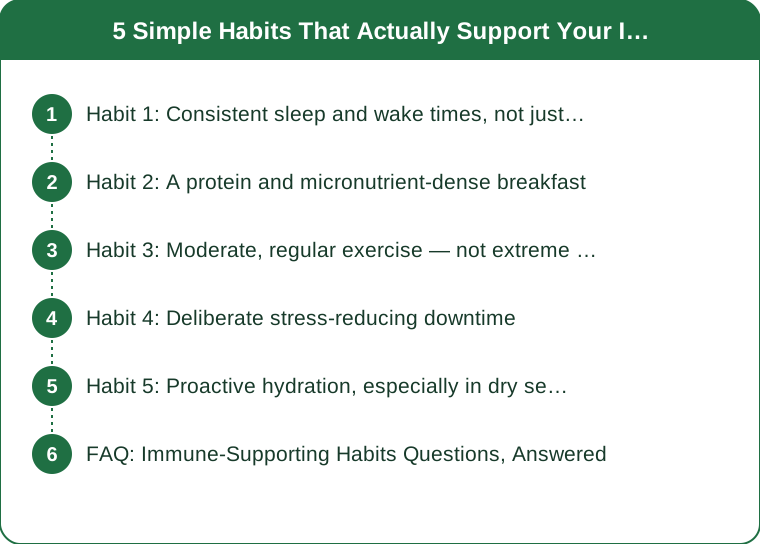
Habit 1: Consistent sleep and wake times, not just total hours
Sleep consistency — going to bed and waking at similar times daily — supports immune-relevant hormone regulation in ways that the same total hours at irregular times doesn’t fully replicate. Even if you’re hitting 7-8 hours, wildly inconsistent timing undercuts some of that benefit.
Habit 2: A protein and micronutrient-dense breakfast
Starting the day with 20-30g of protein alongside vitamin C and zinc-rich foods (citrus, leafy greens, seeds) gives your immune system the raw materials it needs for cell repair and antibody production, rather than starting the day in a nutrient deficit that compounds by evening.
Habit 3: Moderate, regular exercise — not extreme volume
Regular moderate exercise (150 minutes a week of moderate cardio, roughly) is associated with better immune function than either a sedentary pattern or extremely high-volume training, which can temporarily suppress immune response during heavy training blocks. The middle ground is genuinely the sweet spot here.

Habit 4: Deliberate stress-reducing downtime
Chronic elevated cortisol from unmanaged stress measurably suppresses immune function over time. Even 10-15 minutes daily of a genuine downtime activity — not scrolling, but something actually restorative like a short walk or quiet reading — has shown real benefit in stress-immune research.
Habit 5: Proactive hydration, especially in dry seasons
Mucous membranes (your first line of defense against airborne pathogens) function better when adequately hydrated. Dry winter air and indoor heating specifically dry these membranes further, making proactive hydration more, not less, important in colder months.
FAQ: Immune-Supporting Habits Questions, Answered
Do supplements matter at all if these 5 habits are covered?
Supplements can fill specific documented gaps (vitamin D in low-sunlight seasons, for example), but they’re a smaller lever than these core habits — most research shows diminishing returns from supplementing nutrients you’re already getting adequately from food and habits.
How quickly do these habits actually improve immune resilience?
Most of these operate on a weeks-to-months timescale for measurable change, not days — think of them as building a more resilient baseline rather than a quick fix during an active illness.
Which of these 5 matters most if I can only fix one?
Sleep consistency is frequently cited as having outsized impact relative to effort required, making it a reasonable first habit to prioritize if you’re starting from zero.
TL;DR:
- Sleep consistency (not just total hours) meaningfully supports immune-relevant hormone regulation
- A protein and micronutrient-dense breakfast gives your immune system real raw materials early in the day
- Moderate regular exercise beats both a sedentary pattern and extreme training volume for immune function
- Hydration and stress-reducing downtime round out habits that work better together than any single supplement
Keep Reading
This article is for general informational purposes only and is not medical advice. Always consult a qualified health professional for guidance specific to you.