Immune Support That Actually Works: Daily Habits Over Miracle Supplements
Every cold season, the immune-boosting industry sells the same story: your immunity is a dial, and this powder turns it up. The real immune system is less a dial than a garden — tended daily by sleep, food, movement and stress management, and stubbornly unimpressed by emergency elderberry. The honest good news: the habits that genuinely support immune function are known, cheap and entirely in your hands. Here is the tending manual. (General information — immune conditions and frequent illness deserve a doctor’s eyes.)

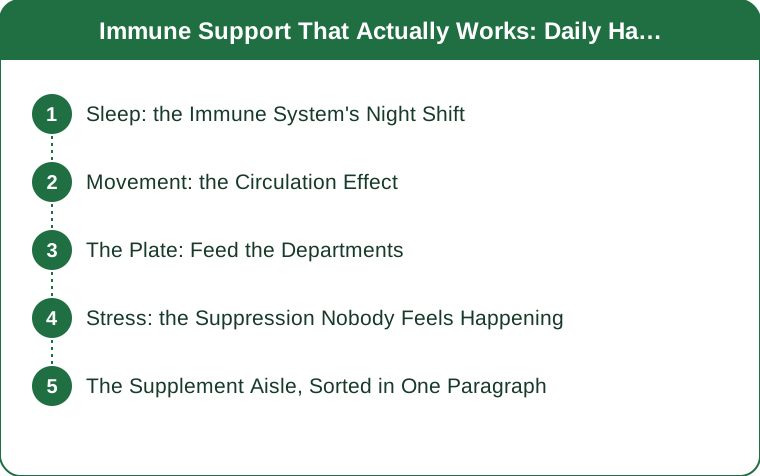
Sleep: the Immune System’s Night Shift
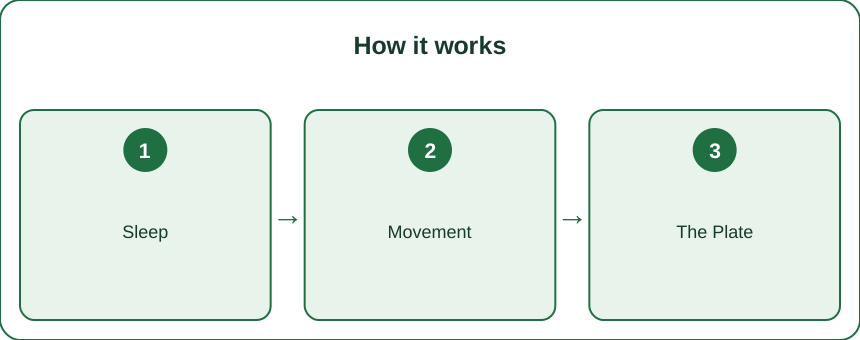
The strongest single lever, by a comfortable margin: sleep is when immune housekeeping runs — infection-fighting cells produced, inflammatory signals rebalanced, immune memory consolidated. The famous demonstration: study volunteers sleeping under six hours were dramatically more likely to catch a rhinovirus deliberately dropped into their noses than those sleeping seven-plus. Chronic short sleep is functionally an immune tax paid daily. The prescription is unglamorous and unmatched: seven to eight hours, consistent schedule, treated as the foundation every other habit stands on.
Movement: the Circulation Effect
Regular moderate exercise is a documented immune ally: each session increases the circulation of surveillance cells — briefly flooding the patrol routes — and habitual movers show fewer respiratory infections and lower chronic inflammation across studies. The dose matters in both directions: 30-ish minutes of moderate activity most days is the sweet spot, while sudden extreme exertion in the unadapted (the untrained marathon) can transiently dent defenses. The takeaway suits real life perfectly: the daily brisk walk is not just cardio — it is an immune patrol schedule.
The Plate: Feed the Departments
No food boosts immunity overnight, but chronic shortfalls quietly understaff it: protein builds the antibodies themselves (another reason women’s chronic under-eating of it matters), vitamin C-rich produce, zinc (meat, shellfish, legumes, seeds) and vitamin D (the one supplement with a legitimate immune résumé, given how commonly women test low) keep the machinery supplied, and the gut deserves special mention — roughly 70% of immune tissue lives gut-adjacent, making the fiber-and-fermented-foods routine an immune strategy wearing a digestion costume. Pattern over panic: the everyday plate, not the sick-day smoothie, is what trains the garden.
Stress: the Suppression Nobody Feels Happening
Chronic stress is the immune system’s quietest adversary: sustained cortisol measurably suppresses immune response — the biology behind getting sick the week after the deadline, a pattern so common researchers named it. The countermeasures are the usual suspects, which is precisely the point: daily movement, real sleep, breathwork or meditation (small but consistent immune-marker improvements in trials), time outdoors, and social connection — loneliness itself carries measurable immune costs. Stress management is not a soft add-on to immune health. Physiologically, it is load-bearing.
The Supplement Aisle, Sorted in One Paragraph
The short honest list: vitamin D if you test low (common, cheap to fix, legitimately immune-relevant), zinc lozenges started immediately at cold onset (modest duration-shortening evidence), and vitamin C as prevention only for heavy exercisers — for everyone else it trims cold duration slightly at best. The rest — elderberry (thin evidence), echinacea (inconsistent), immune gummy blends (marketing with a supplement facts panel) — are hope in bottle form. The uncomfortable arithmetic: one week of proper sleep does more than the entire shelf. The garden wants tending, not products.
Immune support, stripped of marketing: sleep seven-plus, walk most days, feed the system protein and plants, manage the stress that quietly suppresses it, and reserve the supplement budget for tested vitamin D. It is slower-feeling than a miracle powder and incomparably more effective — because immunity was never a dial to crank. It is a garden, and now you have the manual. Tend accordingly, starting tonight at bedtime.
Keep Reading
This article is for general informational purposes only and is not medical advice. Always consult a qualified health professional for guidance specific to you.