Do Probiotics Actually Help Your Immune System, or Is That Marketing
Probiotic supplements are marketed as an immune system upgrade, and the gut-immune connection behind that claim is real. But the leap from ‘gut bacteria matter for immunity’ to ‘this specific bottle on the shelf will reduce your colds’ is where most of the marketing quietly outruns the actual evidence.

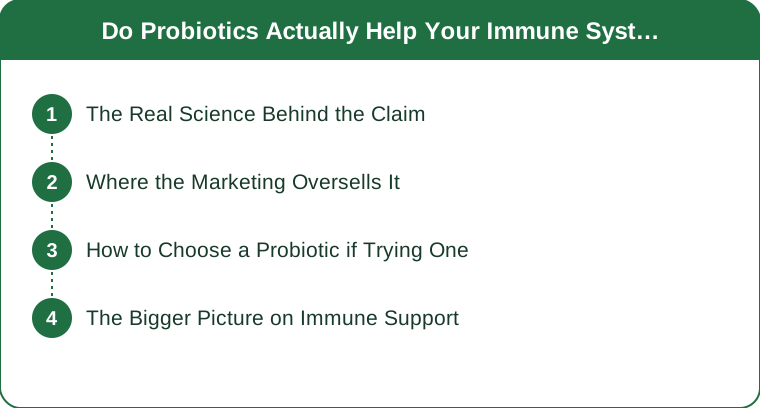
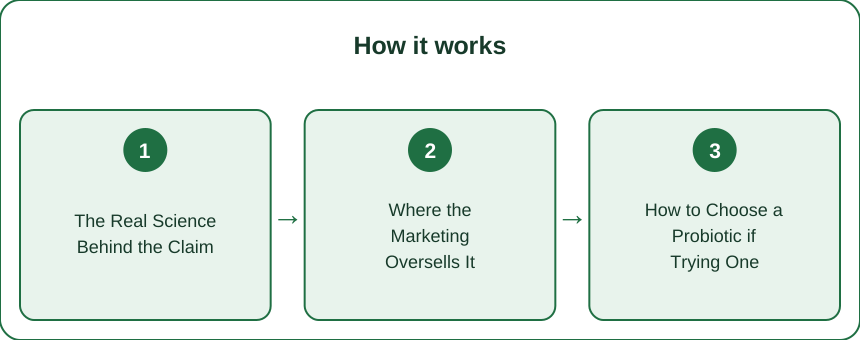
The Real Science Behind the Claim
The legitimate basis: the the-gut-immune-tissue-fact (a large portion of the body’s immune tissue being located in and around the gut, meaning gut bacterial balance genuinely does interact with immune signaling), the the-strain-specific-evidence (some individual probiotic strains, tested in specific clinical trials, showing measurable reductions in upper respiratory infection frequency or duration), the the-general-vs-specific-gap (most general immune health benefits found in research applying to specific, named strains and dosages, not to probiotics as a broad category).
Where the Marketing Oversells It
The overreach: the the-strain-not-listed-problem (many commercial products listing only ‘probiotic blend’ without the specific strain and clinical dose that showed benefit in trials, making it impossible to know if that evidence actually applies), the the-billions-of-cfu-illusion (a high colony-forming-unit count on the label sounding impressive but not correlating directly with effectiveness if the strain itself lacks supporting research), the the-immune-boost-vague-language (marketing phrases like ‘supports immune health’ being intentionally vague enough to avoid needing the strain-specific evidence a real claim would require).

How to Choose a Probiotic if Trying One
The selection method: the the-named-strain-requirement (looking for a specific strain designation on the label, such as a particular Lactobacillus or Bifidobacterium strain code, rather than a generic species name alone), the the-matching-dose-to-research (checking whether the product’s dose is in the same range as the clinical trials that showed a benefit for that strain), the the-realistic-expectation-setting (treating a well-evidenced probiotic as a modest, supportive addition rather than a substitute for sleep, nutrition, and other more impactful immune factors).
The Bigger Picture on Immune Support
The context check: the the-foundational-factors-first (sleep quality, stress levels, and overall diet diversity having a larger, better-established impact on immune function than any single supplement), the the-food-source-option (fermented foods like yogurt, kefir, and kimchi providing some probiotic exposure alongside actual nutrition, which a supplement alone doesn’t), and the frame (probiotics can support immune function, but only specific, well-studied strains at researched doses — a vague ‘probiotic blend’ label is mostly marketing riding on real but narrow science.)
The gut-immune connection is genuinely established science, which is exactly why probiotic marketing gets away with implying more than most products can back up. Real evidence exists for immune benefits, but it applies to specific strains tested at specific doses in actual clinical trials, not to probiotics as a blanket category. A label that says ‘probiotic blend’ with a high colony count and vague ‘supports immunity’ language is leaning on the general science while skipping the specific proof its own product would need. The useful habit is checking for a named strain and comparing the dose to what was actually studied, rather than trusting colony-forming-unit counts or marketing language alone. Even a well-chosen probiotic remains a modest supporting player next to sleep, stress management, and overall diet quality, which continue to move the needle on immune function far more reliably than any single bottle on a shelf.
Keep Reading
This article is for general informational purposes only and is not medical advice. Always consult a qualified health professional for guidance specific to you.