The Actual Rule for Deciding Whether to Train When You're Getting Sick
The popular ‘above the neck, okay to train; below the neck, rest’ rule for deciding whether to exercise while getting sick is a genuinely useful starting heuristic that’s more nuanced in practice than its simple two-line version suggests. Here is what it actually gets right and wrong, and a more complete decision framework. This is general information, not medical advice.

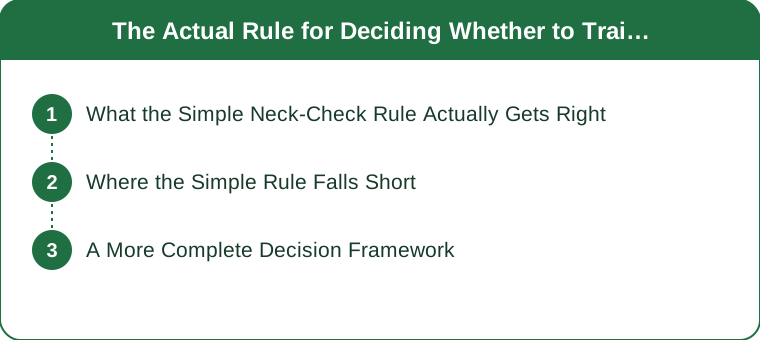
What the Simple Neck-Check Rule Actually Gets Right
The genuine basis: the symptoms-confined-to-the-head-generally-dont-involve-the-same-systemic-inflammatory-response-that-symptoms-below-the-neck-often-signal (the symptom location genuinely correlating in general with whether a systemic inflammatory or immune response is involved, with head-confined symptoms often reflecting a more localized issue than symptoms below the neck, which more often signal broader systemic involvement, per the training-when-you-are-getting-sick-guide logic — the symptom-location-genuinely-correlating-in-general-with-whether-a-systemic-inflammatory-response-is-involved-with-head-confined-symptoms-often-reflecting-a-more-localized-issue), and the reframe (the rule’s core logic as a genuinely reasonable rough heuristic based on a real underlying pattern, not an arbitrary or made-up guideline).

Where the Simple Rule Falls Short
The real limitations: the fever-specifically-is-a-hard-stop-regardless-of-where-other-symptoms-are-located-and-the-simple-rule-doesnt-always-emphasize-this-clearly-enough (the presence of an actual fever functioning as a clear override regardless of where other symptoms happen to be located, a point the simplified popular version of the rule doesn’t always emphasize with enough clarity, per the exercise-immune-system-guide logic — the presence-of-an-actual-fever-functioning-as-a-clear-override-regardless-of-where-other-symptoms-are-located-a-point-the-simplified-version-doesnt-always-emphasize-clearly-enough), the the-overall-fatigue-and-energy-level-matters-independent-of-specific-symptom-location-and-the-simple-rule-doesnt-account-for-it-directly (the general fatigue and energy level being a genuinely relevant factor independent of the specific location of symptoms, something the simple location-based rule doesn’t directly incorporate at all, per the sleep-and-immunity-guide logic — the general-fatigue-and-energy-level-being-a-genuinely-relevant-factor-independent-of-symptom-location-that-the-simple-rule-doesnt-directly-incorporate), and the frame (the rule’s real limitations as not clearly emphasizing fever as an override and not accounting for overall fatigue level independent of symptom location — genuine gaps in an otherwise reasonable starting heuristic).
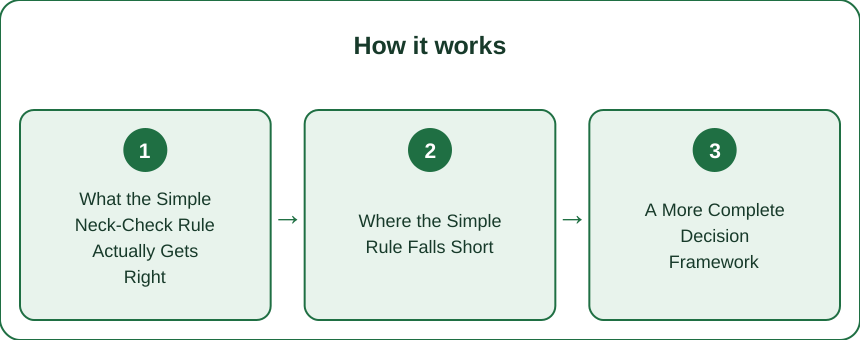
A More Complete Decision Framework
The fuller approach: the treat-any-fever-as-an-automatic-full-rest-regardless-of-where-other-symptoms-are-located (the treating any actual fever as an automatic, non-negotiable full rest day regardless of what other symptoms are present or where they’re located, addressing the biggest gap in the simple version directly, per the training-when-you-are-getting-sick-guide logic — the treating-any-actual-fever-as-an-automatic-non-negotiable-full-rest-day-regardless-of-what-other-symptoms-are-present-directly-addresses-the-biggest-gap-in-the-simple-version), the the-factor-in-overall-energy-and-fatigue-level-as-a-separate-check-alongside-the-symptom-location-check (the adding a genuine separate check on overall energy and fatigue level alongside the symptom-location check, since a person can have only above-the-neck symptoms and still feel too depleted to train effectively, per the immune-system-daily-habits-guide logic — the adding-a-genuine-separate-check-on-overall-energy-and-fatigue-level-alongside-the-symptom-location-check-since-a-person-can-have-only-above-the-neck-symptoms-and-still-feel-too-depleted-to-train), the the-reduce-intensity-rather-than-defaulting-to-full-normal-training-even-when-the-decision-is-to-train (the choosing a genuinely reduced intensity version rather than a full normal-intensity session even on days the decision comes out in favor of training, since ‘okay to train’ doesn’t necessarily mean ‘okay to train at full intensity,’ per the summer-colds-why-guide logic — the choosing-a-genuinely-reduced-intensity-version-rather-than-full-normal-intensity-even-on-days-the-decision-favors-training), and the frame (the fuller framework as fever functioning as an automatic full-rest override, overall energy level checked as a separate factor alongside symptom location, and intensity reduced even on training-decision days — genuinely more complete than the simple two-line version while still keeping its useful core logic intact. This is general information, not medical advice.)
The popular above-the-neck training rule genuinely reflects a real pattern — symptom location does correlate roughly with whether a broader systemic inflammatory response is involved, with head-confined symptoms often reflecting a more localized issue than symptoms below the neck — but the simple version falls short by not clearly emphasizing that any actual fever functions as a hard override regardless of where other symptoms are located, and by not accounting for overall fatigue and energy level as a separate factor independent of symptom location. A more complete framework treats any fever as an automatic, non-negotiable full rest day regardless of other symptoms, adds a genuine separate check on overall energy and fatigue level alongside the symptom-location check since above-the-neck-only symptoms can still come with real depletion, and defaults to a reduced-intensity session rather than a full normal-intensity one even on days the decision favors training, since being okay to train doesn’t automatically mean being okay to train at full intensity. This is general information, not medical advice.
Keep Reading
This article is for general informational purposes only and is not medical advice. Always consult a qualified health professional for guidance specific to you.