Why Back-to-School Season Gets the Whole House Sick (and How to Break the Chain)
Quick Answer: The September sick wave is structural: hundreds of children who spent summer in separate germ pools merge into classrooms, rhinoviruses surge on cue, and young kids - who shed more virus for longer and have not met most strains yet - carry it home, where late-summer households share it efficiently. You cannot cancel the wave, but you can break links in the chain: hand hygiene at the school-to-home threshold, teaching the elbow cough, not sharing water bottles, ventilating shared rooms, protecting adult sleep (the single most measurable immune lever), and isolating the family’s high-touch bottlenecks like towels and phone screens. Expect fewer and shorter household rounds, not zero - that is what winning looks like.
Week one of school: art projects and optimism. Week three: the six-year-old sneezes at dinner, and you can basically watch the next two weeks of the family calendar reschedule itself. The September wave is so reliable that virologists can chart it - which is exactly why it is worth understanding rather than just enduring.

Why September, specifically - the mechanics of the wave
Summer builds separated germ pools; school merges them in a week. Over the break, each family circulates its own small set of viruses. The first weeks of school pour hundreds of those pools into shared classrooms - a giant viral mixing event at the exact moment everyone touches the same doorknobs, tablets, and each other. Surveillance data shows rhinovirus (the leading common-cold culprit) spiking within weeks of school openings, year after year, in country after country.
Little kids are efficient carriers by biology, not hygiene failure. Young children have met fewer strains, so more of what circulates is new to them; they shed higher viral loads for longer than adults with the same infection; and they interact with the world hands-first and face-second. A kindergartner catching six to eight colds in a school year is inside the normal range - each one a delivery opportunity to the household.
Home is a high-efficiency transmission environment. Shared bathrooms, goodnight kisses, snack-sharing, and hours of close indoor contact give household members a substantial attack rate once one person is infected - meaningfully higher for the parent doing the wiping, carrying, and midnight-comfort shifts. Mothers of young children are, statistically, the second domino.
And the adults are softened up on schedule. The back-to-school transition compresses adult sleep (earlier alarms, evening logistics), spikes stress hormones, and often coincides with the return to indoor everything as evenings cool. Short sleep is one of the best-documented amplifiers of cold susceptibility - studies restricting sleep show several-fold higher infection rates after controlled virus exposure. The wave hits households at their least defended moment, which is the part you can actually change.
Breaking the chain - the interventions ranked by payoff
You need the high-yield few done consistently, not the exhaustive list done for one guilty week.
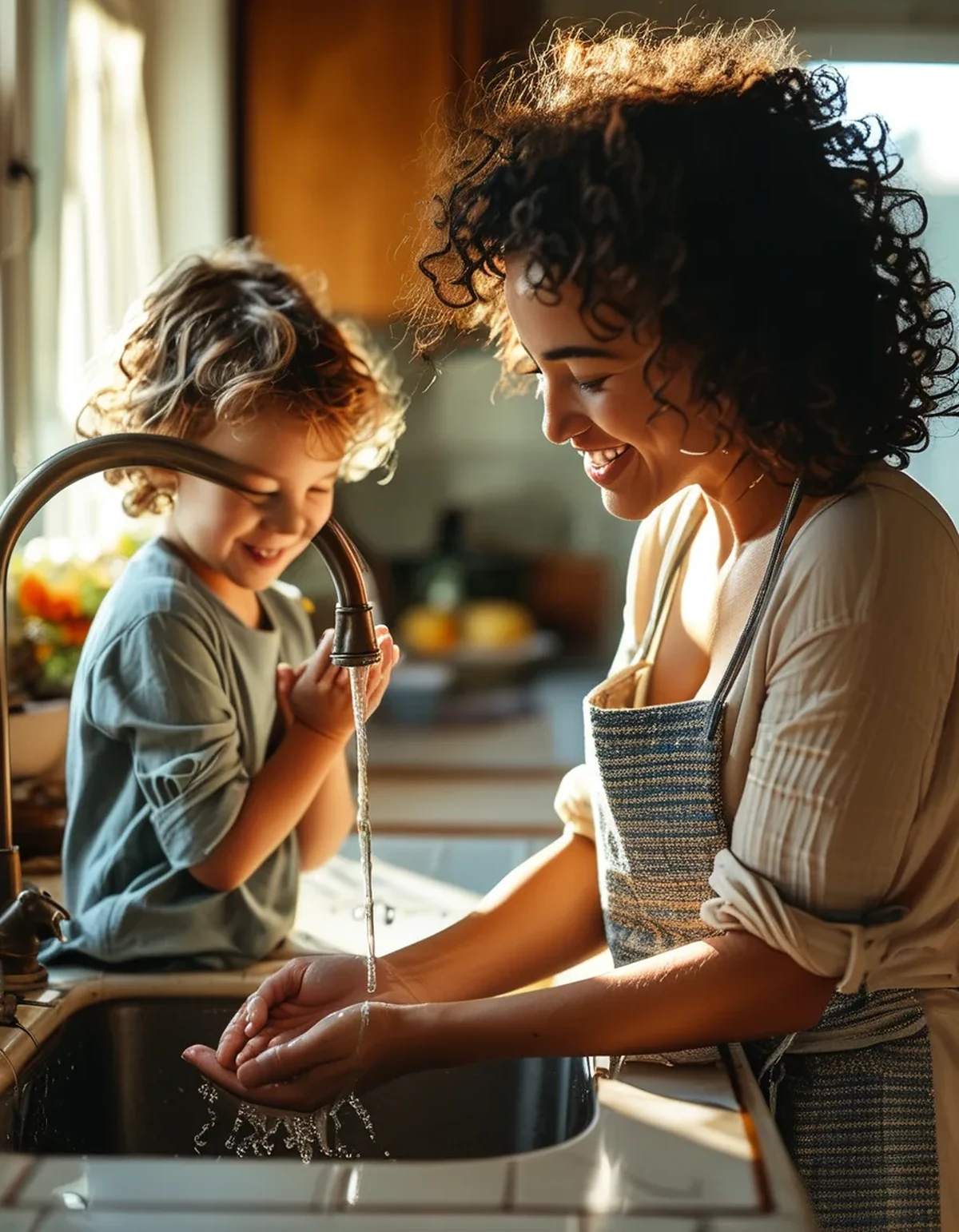
One: the threshold handwash. The single most efficient ritual: everyone washes hands - 20 real seconds, soap - immediately on arriving home, before snacks, screens, or couch. It intercepts the school-to-home delivery at the door. Make it automatic with a stool, foaming soap kids like, and zero negotiation, like seatbelts.
Two: sleep as household policy. Adult and child bedtimes both slide in September; defending them is immune policy, not lifestyle preference. The measurable dose-response between sleep duration and infection resistance makes the 10pm household shutdown worth more than any supplement in the cabinet. When one child is sick, pre-plan the parental night-shift split so one adult sleeps properly - alternating full nights beats both parents half-sleeping for a week.
Three: de-share the bottlenecks. Water bottles, hand towels, lip balm, and toothbrush cups are the family’s viral interchanges. Give each person a distinct water bottle and a distinct hand towel (color-code and wash frequently), park sick-kid cups on their own shelf, and sanitize the true common surfaces - phone screens, remotes, fridge handle, faucet levers - daily during an active round.
Four: air the shared rooms. Respiratory viruses concentrate in still indoor air; September evenings are still mild enough to crack windows during homework and dinner, and a HEPA unit in the sick kid’s room is a reasonable one-time purchase that keeps paying every winter.
Five: teach the two child skills that transfer. The elbow-sleeve cough and the tissue-then-bin-then-nothing-else sequence. Rehearse them as games before anyone is sick; skills installed in peacetime survive wartime.
And the baseline quietly holding it up: regular movement, real food, outdoor time, and current vaccinations for the season - the unglamorous chassis every other intervention bolts onto.
Myth vs Fact: The Family Cold Season
Myth: Getting sick constantly means your family’s immune systems are weak. Fact: Frequent early-school-year colds reflect exposure volume, not broken immunity - young children meeting new strains at industrial scale. The pattern visibly improves as their libraries build; the first year or two of school (or daycare) is the peak by design.
Myth: Cold weather causes colds. Fact: The September spike happens in warm weather - it tracks school openings, not thermometers. Cooler air later contributes indirectly (more indoor time, drier airways), but the ignition event is mixing, which is why the wave is calendar-punctual.
Myth: A strong immune system means never catching what the kids have. Fact: With enough close-contact viral load, healthy adults get infected - the realistic wins are lower frequency, shorter duration, and milder courses. Judging your health by whether you dodge a kindergartner’s rhinovirus is grading yourself against physics.
Myth: Vitamin C megadoses will protect the household. Fact: Trials show at best a modest effect on duration in some groups and essentially none on prevention in ordinary settings. Sleep, hands, and air deliver more than the orange-flavored fizz - though the placebo ritual is harmless if beloved.
Myth: Sanitizing every surface daily is the key. Fact: Hands and shared close air move most respiratory infection; surface sanitizing earns its keep only on the true high-touch bottlenecks during active illness. The family that washes hands at the threshold but shares one hand towel has optimized the wrong link.
Myth: Kids should be kept home at the first sniffle to protect everyone. Fact: By first-symptom time, exposure has usually already happened - and mild-symptom exclusion policies mostly reshuffle attendance without stopping circulation. Follow the school’s fever-and-illness rules, obviously; beyond that, aim at the home chain you control.
Managing the round once it starts - damage control that works
Someone will still get sick. The goal now is one domino, not five.
Declare it early and switch modes. The household that starts sick-protocol at the first sore-throat report - separate towel, own water glass, HEPA on in their room, extra hand hygiene - shortens the chain more than the one that waits for confirmation by full misery. False alarms cost nothing; late starts cost weeks.
Assign one primary caregiver per round when possible. Concentrating the close-contact care in one adult (ideally the one who has already had this bug, if that is knowable) keeps the second parent operational - for the household and for the likely next round. Swap roles between rounds; sainthood is not sustainable staffing.
Protect the sick person’s sleep and everyone else’s separately. The patient heals on sleep; the healthy resist on it. Sometimes that means a parent decamping to the couch for two nights - unromantic, effective, temporary.
Keep the healthy members’ routines running. Cancelling all activity for the household turns one cold into a family shutdown; outdoor time and normal movement for the healthy members is protective, not risky. The six-year-old’s cold does not require the adults to stop walking.
Feed the round boringly well. Soups, fluids, fruit, easy proteins - hydration and eating-anyway matter more than any specific immune food. Warm liquids genuinely ease symptoms; honey (for over-ones) genuinely calms coughs; nothing in the pantry shortens a rhinovirus much, and knowing that saves both money and guilt.
And know the escalation lines: trouble breathing, dehydration signs, fever patterns outside the routine, symptoms sharply worsening after improving, or an infant under three months with any fever - those are clinician calls, not chicken-soup calls. For everything milder, the family cold is a self-limited visitor: your job is hospitality for the patient and border control for everyone else.
This is general information, not medical advice - individual situations, especially with infants, chronic conditions, or immunocompromised family members, deserve professional guidance.
FAQ: Back-to-School Sickness, Answered
Why does my family get sick every September like clockwork?
Because school openings merge hundreds of separate summer germ pools into classrooms, rhinoviruses spike on cue, and young kids - high shedders meeting new strains - deliver them home, where households transmit efficiently. It is a structural annual event; the wins available are fewer, shorter, milder rounds.
How many colds per school year is normal for a child?
Six to eight is inside the ordinary range for young school kids, more in the first year of group care, each lasting a week or two with lingering coughs. What deserves a pediatric conversation: infections that are unusually severe, always in the chest or ears, or a child who is not thriving between them.
What actually stops a cold from spreading through the house?
The high-yield links: threshold handwashing for everyone, no shared water bottles or hand towels, ventilation in shared rooms, daily wipes of true high-touch surfaces during a round, one designated caregiver, and fiercely protected sleep for the healthy members. Perfection is not available; fewer dominoes is.
Do immune supplements protect the family in cold season?
Evidence is thin: vitamin C at best trims duration modestly, zinc lozenges may shorten adult colds slightly if started immediately, vitamin D matters mainly for the deficient. Sleep, hands, air, food, and vaccination outperform the supplement shelf - spend accordingly.
Should parents of young kids just accept getting sick all fall?
Accept some exposure, not the full cascade: the parent playbook - threshold hygiene, alternating night shifts to keep one adult slept, de-shared bottlenecks, early sick-protocol - measurably cuts the every-bug-twice pattern. And the heavy first years genuinely ease as the kids’ immune libraries grow. It is a season of life with an expiration date.
TL;DR:
- The September wave is structural: school merges summer germ pools, rhinovirus spikes on schedule, and young kids deliver high viral loads home.
- Break the chain at the cheap links: threshold handwashing, de-shared bottles and towels, ventilated rooms, elbow coughs, and adult sleep defended as policy.
- Once a round starts: early sick-protocol, one designated caregiver, alternating night shifts, normal routines for the healthy.
- Supplements underdeliver; sleep, hands, and air are the real levers - and cold weather was never the cause.
- Expect fewer and shorter rounds, not zero; the heavy years fade as kids’ immune libraries build.
You cannot veto the September wave - it is on the epidemiological calendar. But the household chain is yours, and every link you break is a week of family life bought back.
Keep Reading
This article is for general informational purposes only and is not medical advice. Always consult a qualified health professional for guidance specific to you.