Why You Keep Getting Sick Despite 'Eating Healthy' — the Overlooked Factor
Quick Answer: A genuinely healthy diet supports immune function, but chronic sleep debt and unmanaged stress can undermine it just as much — and are the factors most people never adjust. Fixing sleep consistency often produces a bigger immune improvement than any additional supplement.
The smoothies are full of fruit and greens. The multivitamin’s a daily habit. And you’re still the person who catches whatever’s going around the office two, three times a season, wondering what else there is to try.

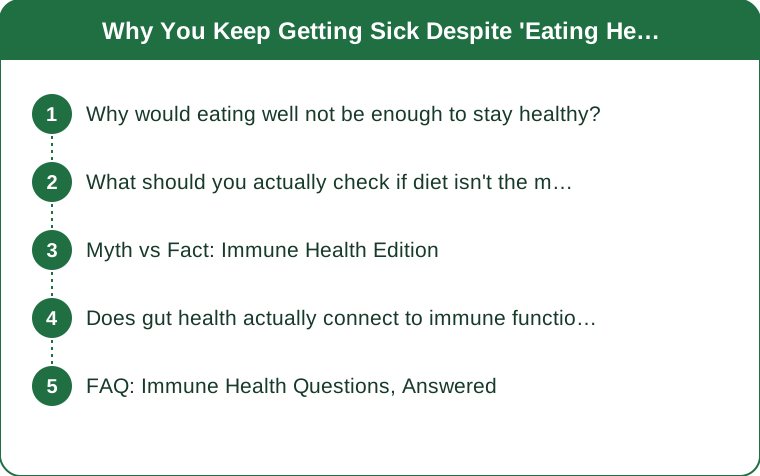
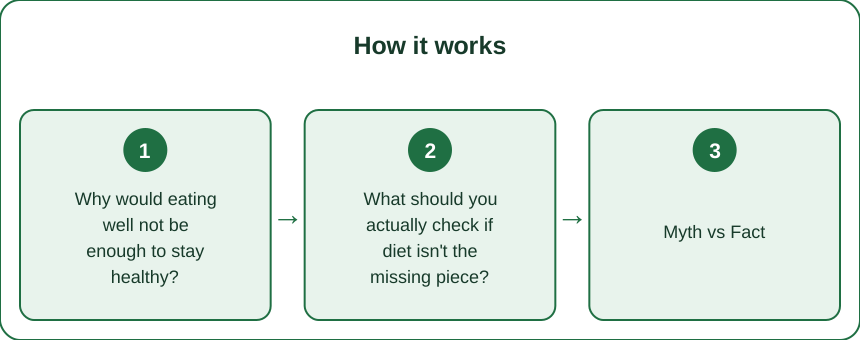
Why would eating well not be enough to stay healthy?
Because immune function depends on several inputs working together, and diet is just one of them. Chronic sleep restriction — even moderate, like consistently getting under 6-7 hours — has been linked to measurably higher susceptibility to catching common illnesses, independent of diet quality.
Stress operates similarly: sustained high stress suppresses immune response through elevated cortisol, in a way that good nutrition alone doesn’t fully offset.
What should you actually check if diet isn’t the missing piece?
Start with sleep consistency, not just total hours — going to bed and waking at wildly different times, even while hitting 7-8 hours on average, disrupts the same processes as short sleep does. A consistent schedule matters nearly as much as duration.
Next, honestly assess chronic stress load — not just acute stressful days, but an ongoing baseline of high stress over weeks or months, which has a cumulative immune-suppressing effect that a good diet can’t fully counteract.

Myth vs Fact: Immune Health Edition
Myth: More vitamin C and zinc supplements mean stronger immunity. Fact: Past meeting basic nutritional needs, more supplementation shows diminishing returns — sleep and stress management typically move the needle further for someone already eating reasonably well.
Myth: Getting sick a few times a year means something is fundamentally wrong. Fact: Adults catching 2-3 colds a year is within a fairly normal range — the frequency worth investigating is markedly above that, or illnesses that consistently take longer than expected to resolve.
Myth: Exercise always boosts immunity, so more is better. Fact: Moderate regular exercise supports immune function, but excessive training without adequate recovery can temporarily suppress it — more isn’t automatically better here either.
Does gut health actually connect to immune function the way it’s talked about?
There’s a real connection — a meaningful share of immune tissue is associated with the gut, and gut microbiome diversity is linked to immune regulation. Diets low in fiber and diverse plant foods are associated with less microbial diversity.
That said, this connection is often oversimplified into ‘eat this one food to fix immunity’ claims that outpace the actual evidence. Consistent fiber intake and diverse plant foods over time matter more than any single ‘superfood.’
FAQ: Immune Health Questions, Answered
How much does sleep really affect getting sick?
Studies on sleep duration and illness susceptibility show a meaningful association — consistently short or irregular sleep correlates with higher rates of catching common respiratory illnesses.
Can stress alone make you sick more often?
Sustained high stress is linked to immune suppression through cortisol, making this a real, evidence-backed factor rather than just a wellness talking point.
When is frequent illness a sign to see a doctor rather than just adjust habits?
If illnesses are notably more frequent than a few times a year, unusually severe, or slow to resolve, that’s worth a medical evaluation to rule out underlying causes. This is general information, not medical advice.
TL;DR:
- Diet alone doesn’t guarantee strong immunity — sleep and stress are independent major factors
- Sleep consistency (not just duration) matters nearly as much as hours slept
- Chronic stress suppresses immune function in ways good nutrition can’t fully offset
- Gut diversity matters, but no single food is a fix on its own
If diet quality hasn’t been the missing piece, check sleep consistency and stress load next — those are the levers most people never actually adjust.
Keep Reading
This article is for general informational purposes only and is not medical advice. Always consult a qualified health professional for guidance specific to you.